










1 / 10 Questions
0 Points

Which Sea Creature Can Regrow Its Brain?

Sea squirt

Planarian flatworm

Axolotl

Sea cucumber

Points won
0
Correct score
0%

More Questions

More Articles

Did You Know These Hidden Meanings Behind Famous Symbols?

Did You Know These Hidden Meanings Behind Famous Symbols?

⏱️ 5 min read

Symbols surround us every day, from corporate logos to religious icons, yet most people remain unaware of the fascinating stories and hidden meanings embedded within them. These visual representations often carry centuries of history, cultural significance, and deliberately crafted messages that go far beyond their surface appearance. Understanding the deeper meanings behind famous symbols reveals a rich tapestry of human communication and intentional design choices that continue to influence our modern world.

The Mystery Within the Dollar Sign

The dollar sign ($) is one of the most recognized symbols globally, but its origins remain surprisingly debated. The most widely accepted theory suggests it evolved from the Spanish peso abbreviation "P" superimposed over an "S." During the American colonial period, the Spanish dollar was the primary currency, and merchants would write "ps" as shorthand. Over time, the P and S merged, with the vertical lines of the P eventually dominating to create the symbol we know today.

Another fascinating theory links the dollar sign to the Pillars of Hercules, which appeared on Spanish currency. These pillars had a banner wrapped around them forming an S-shape, representing Spain's motto "Plus Ultra." This imagery may have contributed to the modern symbol's design, reflecting America's early economic ties to Spanish colonial trade.

The All-Seeing Eye: Beyond Conspiracy Theories

Featured prominently on the United States one-dollar bill, the Eye of Providence has sparked countless conspiracy theories. However, its actual meaning is rooted in religious symbolism dating back to the Renaissance. The eye within a triangle represents divine providence—the idea that a higher power watches over humanity with benevolence and guidance.

The triangle itself holds significance, representing the Holy Trinity in Christian iconography. When the Founding Fathers incorporated this symbol into American currency and the Great Seal in 1782, they intended it to represent the oversight of a divine power in the nation's formation. The symbol predates many secret societies it's associated with today, having appeared in Christian art throughout medieval Europe as a representation of God's omniscience.

The Hidden Arrow in FedEx

One of the most celebrated examples of subliminal design in corporate branding, the FedEx logo contains an arrow cleverly hidden between the letters E and X. Created by designer Lindon Leader in 1994, this negative space arrow symbolizes speed, precision, and forward movement—perfectly encapsulating the company's core service values.

What makes this design brilliant is its subtlety. Most people don't notice the arrow upon first glance, but once discovered, it becomes impossible to unsee. This psychological impact creates a memorable brand experience and demonstrates how effective design can communicate multiple layers of meaning simultaneously. The logo has won over forty design awards and is consistently ranked among the world's best corporate identities.

The Peace Symbol's Origins in Nuclear Disarmament

Today's universal peace symbol carries a specific historical context that many have forgotten. British designer Gerald Holtom created it in 1958 for the Campaign for Nuclear Disarmament. The symbol ingeniously combines semaphore signals for the letters N and D (Nuclear Disarmament), superimposed over each other within a circle.

In semaphore flag signaling, N is represented by holding flags in an inverted V position, while D is signaled by holding one flag up and one down. Holtom also stated the symbol could represent a human in despair, with arms stretched downward. The circle around these elements represents global unity and wholeness. What began as a specific anti-nuclear weapon symbol evolved into the broader peace movement icon recognized worldwide today.

The Bluetooth Symbol's Viking Heritage

The Bluetooth wireless technology symbol offers a fascinating glimpse into Scandinavian history. The symbol combines two runic letters: Hagall (ᚼ) and Bjarkan (ᛒ), which form the initials of Harald "Bluetooth" Gormsson, a tenth-century Danish king known for uniting warring Scandinavian tribes.

The technology's developers chose this name and symbol to represent how Bluetooth unites different communication protocols, much as King Harald united Denmark and Norway. Harald earned his nickname either from his fondness for blueberries or possibly from a dead tooth that appeared blue. This clever historical reference transforms a seemingly abstract tech symbol into a meaningful representation of connection and unification across different platforms.

The Caduceus and Medical Confusion

Many medical organizations mistakenly use the caduceus—a staff with two serpents and wings—as their symbol. However, the authentic symbol of medicine is the Rod of Asclepius, featuring a single serpent wrapped around a plain staff. The caduceus actually belongs to Hermes, the Greek messenger god associated with commerce, negotiation, and trickery.

This confusion likely originated in the early twentieth century when the U.S. Army Medical Corps adopted the caduceus, possibly mistaking it for the Rod of Asclepius. The single-serpent Rod of Asclepius correctly represents healing and medicine, named after the Greek god of medicine. The serpent symbolizes renewal and regeneration through the shedding of skin, while the staff represents the healing arts. This centuries-old case of mistaken identity continues to perplex medical historians and symbolism experts.

The Power of Symbolic Communication

These hidden meanings demonstrate that symbols function as compact vessels of information, history, and intention. Whether deliberately designed or evolved through cultural use, they communicate complex ideas instantaneously across language barriers. Understanding their deeper meanings enriches our appreciation of visual communication and reveals the thoughtful craftsmanship behind designs we encounter daily. The next time you see a familiar symbol, consider what stories and meanings might lie beneath its surface.
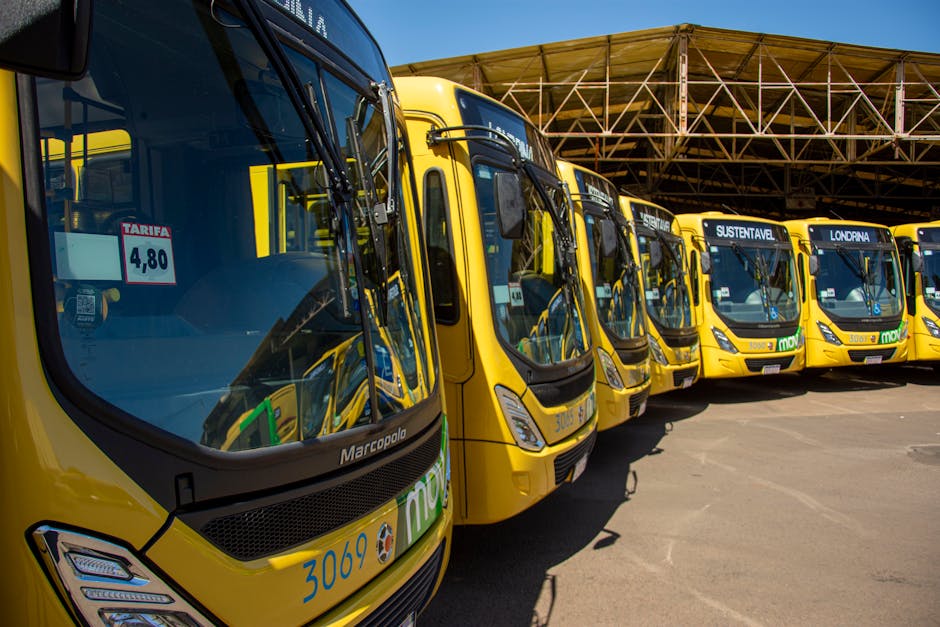
Did You Know These Quick Facts About Transportation?

Did You Know These Quick Facts About Transportation?

⏱️ 5 min read

Transportation has shaped human civilization in profound ways, connecting people, goods, and ideas across vast distances. From ancient footpaths to supersonic jets, the evolution of how we move has transformed economies, cultures, and daily life. Understanding the fascinating facts behind various transportation methods reveals not only technological achievements but also surprising statistics that highlight the incredible complexity of modern mobility systems.

The Staggering Scale of Global Aviation

The aviation industry operates on a scale that most people rarely consider. On any given day, approximately 100,000 flights take off and land around the world, carrying nearly 10 million passengers. This means that at any moment, roughly 500,000 people are airborne, traveling at speeds that would have seemed magical just a century ago. The Boeing 747, often called the "Queen of the Skies," can carry up to 660 passengers in a high-density configuration, though typical arrangements seat around 400 people.

Commercial aircraft cruise at altitudes between 35,000 and 42,000 feet, where the thinner air reduces drag and improves fuel efficiency. At these heights, planes travel at approximately 550 miles per hour, allowing passengers to cross the Atlantic Ocean in under seven hours. The longest non-stop commercial flight currently operates between Singapore and New York, covering 9,537 miles in approximately 18 hours and 30 minutes.

Maritime Transportation: The Invisible Giant

While aviation captures public imagination, maritime shipping actually moves the vast majority of global trade. Approximately 90% of all international goods travel by sea, making container ships the unsung heroes of global commerce. A single large container ship can carry between 18,000 and 24,000 twenty-foot equivalent units (TEUs), which translates to an enormous amount of cargo. To put this in perspective, one of these massive vessels can transport enough goods to stock several large retail stores for an entire year.

The shipping industry's efficiency is remarkable. Moving one ton of cargo by ship costs significantly less than any other transportation method, and modern vessels can travel thousands of miles on relatively modest fuel consumption when measured per ton of cargo. The longest maritime shipping route, from Asia to Europe via the Suez Canal, spans approximately 12,000 nautical miles and takes roughly 30 days to complete.

Railway Systems: Speed and Efficiency Combined

Rail transportation represents one of the most efficient methods of moving people and goods over land. Japan's Shinkansen, commonly known as the bullet train, began operations in 1964 and has maintained an impeccable safety record while traveling at speeds exceeding 200 miles per hour. In its entire operational history, there has never been a single passenger fatality due to train accidents.

Modern high-speed rail networks continue to expand globally. China now operates the world's largest high-speed rail network, with over 25,000 miles of track connecting major cities. These trains regularly reach speeds of 217 miles per hour, making rail travel competitive with air travel for distances up to 600 miles when considering total journey time including airport security and boarding procedures.

Freight Rail's Environmental Advantage

Freight trains demonstrate exceptional efficiency in moving goods. A single freight train can replace approximately 300 trucks on highways, significantly reducing road congestion and environmental impact. Railways can move one ton of freight nearly 500 miles on a single gallon of fuel, making it four times more fuel-efficient than truck transportation. This efficiency becomes increasingly important as global trade volumes continue to grow and environmental concerns mount.

Automotive Transportation Statistics That Surprise

The automobile industry has fundamentally reshaped modern society. Currently, there are approximately 1.4 billion vehicles operating worldwide, with this number expected to reach 2 billion by 2040. Americans alone drive approximately 3.2 trillion miles annually, which equates to roughly 13,500 miles per driver. The average car contains about 30,000 individual parts, representing a marvel of engineering and manufacturing coordination.

Modern vehicles have become significantly safer and more efficient than their predecessors. Today's cars are approximately 99% recyclable by weight, with manufacturers recovering and reusing steel, aluminum, copper, and various plastics. Additionally, fuel efficiency has improved dramatically, with many conventional vehicles now achieving over 40 miles per gallon, while hybrid and electric vehicles push these boundaries even further.

Public Transportation Networks in Major Cities

Urban transit systems move billions of passengers annually, providing essential mobility in densely populated areas. The Tokyo Metro system serves approximately 8.7 million passengers daily, making it one of the busiest subway systems globally. During rush hour, trains arrive at some stations every two minutes, and platform attendants help push passengers into crowded cars to maximize capacity.

The London Underground, the world's oldest underground railway system, opened in 1863 and now encompasses 272 stations across 250 miles of track. Moscow's Metro system stands out for its artistic architecture, with many stations featuring ornate decorations, chandeliers, and marble columns that make them resemble underground palaces rather than simple transit stations.

The Future of Transportation Technology

Emerging transportation technologies promise to revolutionize mobility once again. Electric vehicles are rapidly gaining market share, with global sales exceeding 10 million units annually. Autonomous vehicle technology continues advancing, with some experts predicting widespread adoption within the next two decades. Hyperloop concepts propose moving passengers at speeds exceeding 700 miles per hour through low-pressure tubes, potentially making the journey from Los Angeles to San Francisco in just 30 minutes.

These innovations, combined with improvements in traditional transportation methods, ensure that human mobility will continue evolving, making travel faster, safer, and more sustainable for future generations.