










1 / 10 Questions
0 Points

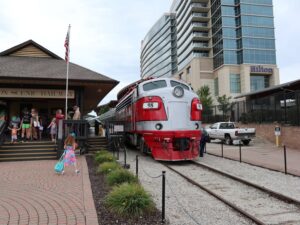
Which Train Station Was Built In The Wrong Country?

Geneva station

Basel station

La Cure station

Zurich station

Points won
0
Correct score
0%

More Questions

More Articles

Did You Know These Facts About Legendary Coaches?

Did You Know These Facts About Legendary Coaches?

⏱️ 5 min read

Throughout sports history, legendary coaches have shaped not only their teams but the very fabric of competitive athletics. While fans celebrate their championship records and tactical brilliance, many fascinating facts about these iconic figures remain lesser-known. From unusual career paths to innovative strategies that revolutionized their sports, these coaching legends have stories that extend far beyond the win-loss columns.

Vince Lombardi's Brief Playing Career and Corporate Background

Before becoming synonymous with NFL excellence, Vince Lombardi's path to coaching greatness took unexpected turns. Despite his legendary status in professional football, Lombardi never played in the NFL. He was one of Fordham University's famous "Seven Blocks of Granite" offensive linemen in the 1930s, but his playing career ended there. What many don't realize is that Lombardi spent time working in the insurance and finance industries while coaching high school football, demonstrating that coaching excellence doesn't always follow a linear path.

Lombardi didn't receive his first head coaching position until he was 47 years old when he took over the Green Bay Packers in 1959. In just nine seasons, he transformed a struggling franchise into a dynasty, never posting a losing season and winning five NFL championships. His famous quote, "Winning isn't everything, it's the only thing," is actually a misattribution—he said, "Winning isn't everything, but wanting to win is."

John Wooden's Perfect Season Achievement

UCLA basketball coach John Wooden accomplished what many consider impossible in college basketball: a perfect 30-0 season in 1972-1973. However, this remarkable achievement represents just one facet of his unprecedented dynasty. Wooden's UCLA teams won 10 NCAA championships in 12 years, including an astonishing seven consecutive titles from 1967 to 1973.

What makes Wooden's legacy particularly unique is his "Pyramid of Success," a philosophical framework he developed that emphasized character development alongside athletic achievement. He never scouted opponents and rarely discussed them with his players, focusing instead on perfecting his own team's execution. Wooden also maintained detailed practice plans down to the minute and was known for teaching players seemingly mundane tasks, including the proper way to put on socks and shoes to prevent blisters.

Phil Jackson's Unconventional Methods

With 11 NBA championships as a head coach, Phil Jackson holds the record for most titles in league history. However, his approach to coaching broke conventional molds in professional sports. Jackson incorporated Zen Buddhism, Native American philosophy, and mindfulness meditation into his coaching methodology, practices that were virtually unheard of in professional basketball when he began implementing them.

Jackson would gift books to his players, carefully selecting titles that addressed their specific needs or challenges. He created "theme seasons" with specific focuses and would use unusual motivational tactics, such as showing the Chicago Bulls clips from "The Wizard of Oz" to illustrate team concepts. Despite his mystical reputation, Jackson was also a master tactician who successfully implemented the triangle offense, a complex system that many considered outdated, to historic effect.

Pat Summitt's Unmatched Consistency

Pat Summitt's 1,098 career victories in women's college basketball represent the most wins by any NCAA basketball coach, male or female. Over 38 seasons at Tennessee, she never experienced a losing season—a streak of consistency unmatched in college basketball. Summitt won eight NCAA championships and appeared in 18 Final Fours, but her impact extended far beyond statistics.

Every player who completed their eligibility under Summitt graduated from the University of Tennessee, a 100% graduation rate that stands as a testament to her commitment to education. She was known for her intense, demanding coaching style, earning the nickname "The General," yet she maintained deep, lasting relationships with her former players. Summitt continued coaching for several years after being diagnosed with early-onset Alzheimer's disease, demonstrating extraordinary courage and dedication to her program.

Bill Belichick's Defensive Genius Origins

New England Patriots coach Bill Belichick has won six Super Bowl championships, but his coaching roots trace back to a volunteer position. His father, Steve Belichick, was a longtime assistant coach and scout at the Naval Academy, and Bill grew up studying film and breaking down opponents. He started his NFL career in 1975 with the Baltimore Colts making $25 per week as a gofer and film analyst.

Belichick's defensive genius was on full display in Super Bowl XXV when, as defensive coordinator for the New York Giants, his game plan to stop the Buffalo Bills' high-powered offense is enshrined in the Pro Football Hall of Fame. His attention to detail is legendary—he's known for understanding obscure rules better than officials and has authored several rule changes through creative exploitation of loopholes.

Alex Ferguson's Longevity and Transformation

Sir Alex Ferguson managed Manchester United for 26 years, winning 13 Premier League titles and transforming the club into a global powerhouse. What many don't know is that Ferguson nearly faced termination in 1989 before his success began. His job was reportedly saved by a Mark Robins goal in an FA Cup match, which sparked a run to the FA Cup title and secured Ferguson's position.

Ferguson's ability to rebuild championship teams multiple times within his tenure set him apart. He successfully managed across different generations of players and adapted to evolving tactical trends in football. His "hairdryer treatment"—intense, close-range verbal criticism—became infamous, yet he also displayed sophisticated psychological understanding and man-management skills that kept players motivated throughout his remarkable tenure.

These legendary coaches demonstrate that greatness emerges from diverse paths and philosophies. Their hidden stories reveal that success stems not just from tactical knowledge but from character, innovation, persistence, and the ability to inspire others toward collective achievement.

Did You Know These Quick Facts About Transportation History?

Did You Know These Quick Facts About Transportation History?

⏱️ 5 min read

Transportation has shaped human civilization in profound ways, connecting people, goods, and ideas across vast distances. From ancient trade routes to modern supersonic travel, the evolution of how we move from place to place reveals fascinating stories of innovation, perseverance, and human ingenuity. The following quick facts illuminate surprising moments and milestones in transportation history that continue to influence our world today.

The Ancient Romans Built Over 250,000 Miles of Roads

The Roman Empire's extensive road network remains one of history's most impressive infrastructure achievements. At its peak, the system stretched over 250,000 miles, connecting Rome to the far reaches of its territories across Europe, North Africa, and the Middle East. These weren't simple dirt paths—Roman roads featured sophisticated engineering with multiple layers of materials including sand, gravel, and paving stones. The famous Via Appia, constructed in 312 BCE, still exists today and portions remain in use after more than 2,300 years. The Romans understood that effective transportation infrastructure was essential for military movement, trade, and maintaining control over their vast empire.

The First Traffic Light Exploded

Before the familiar red, yellow, and green lights we know today, London installed the world's first traffic signal in 1868 outside the Houses of Parliament. This pioneering device used gas-lit semaphore arms during the day and red and green gas lamps at night to control traffic flow. Unfortunately, the experiment was short-lived. Less than a month after installation, the gas-powered signal exploded, injuring the police officer operating it. This setback delayed the development of traffic control systems for decades until electric traffic lights emerged in the early 20th century, with the first three-color light debuting in Detroit in 1920.

Bicycles Preceded Cars in the Transportation Revolution

While automobiles dominate modern discussions of personal transportation, bicycles actually played a crucial role in revolutionizing individual mobility first. The "safety bicycle" with equal-sized wheels and chain drive emerged in the 1880s, creating a bicycle boom that transformed society before cars became widely accessible. Bicycles gave people unprecedented freedom of movement, influenced women's liberation by providing independent transportation, and even prompted improvements in road quality that later benefited automobiles. Early automotive pioneers, including Henry Ford and the Wright Brothers, were bicycle mechanics before turning their attention to motorized vehicles.

The Transcontinental Railroad Was Completed With a Golden Spike

On May 10, 1869, at Promontory Summit in Utah Territory, the Union Pacific and Central Pacific railroads joined their tracks with the ceremonial driving of a golden spike. This moment marked the completion of the First Transcontinental Railroad, reducing cross-country travel from months to less than a week. The construction required extraordinary human effort, with predominantly Chinese immigrants building from the west and Irish immigrants constructing from the east. The project overcame formidable obstacles including the Sierra Nevada mountains and vast deserts, fundamentally transforming American commerce, settlement patterns, and national identity.

The Hindenburg Disaster Ended the Airship Era in Just 37 Seconds

Luxury airship travel represented the pinnacle of sophisticated transportation in the 1930s, with German Zeppelins crossing the Atlantic in comfort and style. The LZ 129 Hindenburg was the largest aircraft ever built, measuring 804 feet long. However, on May 6, 1937, while attempting to land in New Jersey after a transatlantic voyage, the hydrogen-filled airship caught fire and was destroyed in just 37 seconds. Of the 97 people aboard, 35 died in the disaster. The tragedy, captured on film and radio, effectively ended the era of passenger airship travel, despite ongoing debates about the actual cause of the fire.

The Interstate Highway System Required More Concrete Than All Previous Projects Combined

President Dwight D. Eisenhower championed the Federal-Aid Highway Act of 1956, which created America's Interstate Highway System. The project's scale was staggering—it required more concrete than all the roads, bridges, and construction projects built in the entire previous history of the United States combined. The system eventually encompassed over 48,000 miles of highways and took 35 years to complete. Eisenhower's vision was partially inspired by Germany's Autobahn system and his experience moving military convoys across the country in 1919, which took 62 days due to poor road conditions. The Interstate system fundamentally reshaped American life, influencing suburban development, commerce, and culture.

The First Subway System Opened in 1863

London's Metropolitan Railway, which opened on January 10, 1863, became the world's first underground railway system. Initially covering just six kilometers, the steam-powered trains carried 38,000 passengers on opening day despite concerns about traveling in tunnels beneath the city. The ventilation of steam and smoke in underground tunnels posed significant challenges until electrification arrived decades later. The success of London's "Tube" inspired cities worldwide to develop their own subway systems, with Boston opening the first American subway in 1897. Today, rapid transit systems move billions of passengers annually in cities across the globe, making underground railways an indispensable component of urban transportation infrastructure.

These remarkable facts demonstrate how transportation innovations have consistently pushed the boundaries of what seemed possible, connecting humanity in ever more efficient and surprising ways throughout history.