1 / 10 Questions
0 Points

Which of these animals is real?

Dragon

Unicorn

Platypus

Phoenix

Points won
0
Correct score
0%

More Questions

More Articles

Top 10 Fun Facts You Can Share at Any Party

Top 10 Fun Facts You Can Share at Any Party

⏱️ 6 min read

Looking to become the most interesting person at your next social gathering? Having a collection of fascinating facts at your disposal can transform any conversation and make you a memorable presence. These unexpected tidbits of knowledge span various subjects, from nature and science to history and human behavior, ensuring you'll have something intriguing to share no matter the crowd or context.

Conversation-Starting Facts Worth Knowing

1. Honey's Eternal Shelf Life

Among all food items, honey stands alone as the only one that never spoils. Archaeologists have discovered pots of honey in ancient Egyptian tombs that are over 3,000 years old and still perfectly edible. This remarkable preservation occurs due to honey's unique chemical composition: it's extremely low in moisture and highly acidic, creating an inhospitable environment for bacteria and microorganisms. Additionally, bees add an enzyme that produces hydrogen peroxide, giving honey natural antibacterial properties. This means that jar in your pantry could theoretically last for millennia.

2. Bananas Are Technically Berries, But Strawberries Aren't

The botanical definition of a berry often contradicts what we commonly think. In botanical terms, a berry must develop from a flower with one ovary and typically has seeds embedded in the flesh. Bananas perfectly fit this definition, as do grapes, kiwis, and even pumpkins. Strawberries, however, fail to qualify because their seeds are on the outside, and they develop from a flower with multiple ovaries. What we eat as the "strawberry" is actually the enlarged receptacle of the flower. This surprising classification extends to raspberries and blackberries, which are actually aggregate fruits, not berries at all.

3. The Human Body Contains Enough Carbon to Make 900 Pencils

The human body is essentially a walking chemistry set, containing enough carbon to manufacture approximately 900 pencils. Beyond carbon, the average adult body contains enough iron to forge a 3-inch nail, sufficient sulfur to kill all fleas on a typical dog, enough fat to make seven bars of soap, and adequate phosphorus to create 2,200 match heads. These elements combine to create the complex biological machine that is the human body. This composition demonstrates that we're literally made of the same fundamental materials as the world around us.

4. A Single Cloud Can Weigh Over One Million Pounds

Despite their fluffy, weightless appearance, clouds are surprisingly heavy. Scientists estimate that a typical cumulus cloud weighs approximately 1.1 million pounds, roughly equivalent to 100 elephants floating in the sky. This weight comes from the countless water droplets suspended in the air. These droplets are so small and dispersed that air currents easily keep them aloft. The cloud appears to float because its weight is distributed across such a vast area, and the water droplets are tiny enough that air resistance prevents them from falling quickly.

5. Octopuses Have Three Hearts and Blue Blood

The octopus possesses one of nature's most unusual circulatory systems. Two of its three hearts pump blood to the gills, where it picks up oxygen, while the third heart circulates that oxygenated blood to the rest of the body. Even more fascinating, their blood is blue rather than red. This occurs because octopuses use a copper-based protein called hemocyanin to transport oxygen, rather than the iron-based hemoglobin that makes human blood red. This adaptation makes their blood more efficient at transporting oxygen in cold, low-oxygen environments where many octopus species live.

6. The Eiffel Tower Grows Taller in Summer

The iconic Eiffel Tower can actually grow by more than 6 inches during hot summer days. This phenomenon occurs due to thermal expansion: when iron heats up, its particles move more and take up more space, causing the metal to expand. On particularly hot days, the sun-facing side of the tower expands more than the shaded side, causing the tower to lean slightly away from the sun. When temperatures cool, the structure contracts back to its original size. This same principle affects countless metal structures worldwide, though few are as precisely measured as this famous landmark.

7. Sharks Predate Trees on Earth

Sharks have been swimming in Earth's oceans for approximately 400 million years, while the earliest trees appeared around 350 million years ago. This means sharks existed for roughly 50 million years before trees. These ancient predators survived four of the five major mass extinction events, demonstrating remarkable evolutionary resilience. Modern sharks bear surprising similarities to their ancient ancestors, proving that their body design is exceptionally well-suited for survival. This makes sharks living fossils that provide insights into life long before dinosaurs walked the Earth.

8. A Day on Venus Is Longer Than Its Year

Venus exhibits one of the solar system's strangest rotational quirks. The planet takes approximately 243 Earth days to complete one rotation on its axis, but only 225 Earth days to orbit the sun. This means a single day on Venus (one complete rotation) actually lasts longer than a Venusian year (one complete orbit around the sun). Additionally, Venus rotates in the opposite direction of most planets in our solar system, meaning the sun rises in the west and sets in the east. Scientists believe a massive collision in Venus's past may have caused this unusual rotation.

9. Your Brain Uses More Energy Than Any Other Organ

Despite representing only about 2% of total body weight, the human brain consumes approximately 20% of the body's total energy. This energy powers approximately 86 billion neurons that constantly communicate through electrical and chemical signals. The brain requires this substantial energy even during sleep, as it consolidates memories, removes toxins, and maintains vital functions. This high energy demand explains why mental fatigue feels as draining as physical exhaustion and why glucose is so critical for cognitive function.

10. Cleopatra Lived Closer to the iPhone Than to the Pyramids

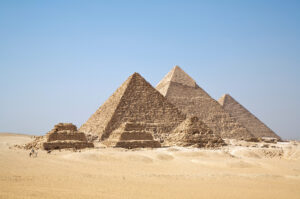
Cleopatra VII ruled Egypt from 51 BCE to 30 BCE, while the Great Pyramid of Giza was completed around 2560 BCE. This means approximately 2,500 years separated Cleopatra from the pyramid's construction. The first iPhone was released in 2007, making Cleopatra's reign closer to our smartphone era than to the age of pyramid building. This fact provides striking perspective on just how ancient the pyramids truly are and how much Egyptian civilization itself spanned across millennia.

Making Facts Memorable

These ten facts offer perfect conversation starters because they challenge common assumptions and reveal the unexpected nature of our world. From the peculiar biology of octopuses to the surprising mathematics of astronomical bodies, each fact provides an opportunity to engage others and share knowledge. The next time conversation lulls at a gathering, drawing upon these fascinating tidbits can reinvigorate discussion and establish you as someone who brings interesting perspectives to any social situation. Remember, the best party guests are those who share knowledge that enlightens, entertains, and sparks curiosity in others.

Did You Know These Quick Facts About Building Materials?

Did You Know These Quick Facts About Building Materials?

⏱️ 5 min read

Building materials form the foundation of every structure around us, from ancient monuments to modern skyscrapers. Throughout human history, the evolution of construction materials has reflected technological advancement, environmental adaptation, and creative innovation. Understanding these materials reveals fascinating insights into engineering, sustainability, and the built environment that shapes our daily lives.

The Ancient Origins of Concrete

Concrete, one of the most widely used building materials today, has a history spanning over 8,500 years. The ancient Romans perfected a formula using volcanic ash, lime, and seawater to create structures that have endured for millennia. The Pantheon in Rome, constructed in 126 AD, features a concrete dome that remains the world's largest unreinforced concrete dome. Remarkably, Roman concrete has proven more durable than many modern formulations, with recent research revealing that seawater actually strengthens the material over time through chemical reactions with volcanic ash.

Modern concrete production accounts for approximately 8% of global carbon dioxide emissions, making it a significant environmental concern. However, researchers are developing innovative alternatives, including carbon-capturing concrete that absorbs CO2 during curing and bio-concrete containing bacteria that can self-heal cracks.

The Surprising Properties of Bamboo

Bamboo stands out as one of nature's most remarkable building materials, combining rapid renewability with exceptional strength. This grass species can grow up to 35 inches in a single day, making it the fastest-growing plant on Earth. Despite its lightweight nature, certain bamboo species possess tensile strength comparable to steel, reaching up to 28,000 pounds per square inch.

Traditional cultures throughout Asia have utilized bamboo in construction for thousands of years, but contemporary architects are rediscovering its potential for sustainable building. Bamboo requires no fertilizers or pesticides, regenerates from its own roots after harvesting, and sequesters significant amounts of carbon dioxide. Modern treatments and engineering techniques now allow bamboo to meet international building codes, making it viable for everything from residential homes to multi-story structures.

Steel: The Backbone of Modern Construction

Steel revolutionized construction in the 19th century, enabling the vertical expansion of cities through skyscraper development. The material's high strength-to-weight ratio allows buildings to reach unprecedented heights while using relatively less material. The Burj Khalifa in Dubai, currently the world's tallest building at 2,717 feet, required approximately 39,000 tons of steel reinforcement.

Steel's recyclability makes it one of the most sustainable building materials available. Nearly 90% of structural steel is recycled at the end of a building's life, and the material can be recycled indefinitely without losing strength or quality. The steel industry has reduced its energy consumption per ton produced by approximately 60% since 1960, demonstrating continuous improvement in environmental efficiency.

The Thermal Efficiency of Straw Bales

Straw bale construction, while often associated with traditional or alternative building methods, offers impressive insulation properties that surpass conventional materials. A standard straw bale wall provides an R-value between 40 and 60, significantly exceeding typical fiberglass insulation at R-13 to R-15. This exceptional thermal performance can reduce heating and cooling costs by up to 75% compared to conventional construction.

Contrary to common concerns, properly constructed straw bale walls resist fire exceptionally well due to their density, which limits oxygen availability. Testing has shown that plastered straw bale walls can withstand fire for up to two hours, meeting or exceeding fire safety standards. Additionally, straw is an agricultural byproduct often burned or discarded, making its use in construction an environmentally beneficial repurposing of waste material.

Glass: More Than Meets the Eye

Modern architectural glass extends far beyond simple transparency, incorporating sophisticated technologies for energy efficiency and comfort. Low-emissivity coatings can reflect up to 70% of solar heat while maintaining visible light transmission, dramatically reducing cooling costs. Electrochromic "smart glass" can change tint in response to electrical current, allowing dynamic control of light and heat entering buildings.

The production of glass dates back approximately 5,000 years, but contemporary manufacturing has achieved remarkable precision. Today's float glass process produces panels with thickness variations of less than 0.1 millimeters across entire sheets. Triple-glazed windows with insulating gas fills can achieve R-values exceeding R-10, comparable to insulated wall sections.

Cross-Laminated Timber's Comeback

Cross-laminated timber (CLT) represents a renaissance for wood in large-scale construction. This engineered wood product layers lumber boards perpendicular to each other, creating panels that rival concrete and steel in strength while remaining significantly lighter. CLT panels can support multi-story buildings, with some timber towers now exceeding 18 stories in height.

Wood construction offers substantial environmental advantages, as trees absorb carbon dioxide during growth, effectively storing carbon within building materials. A cubic meter of CLT can store approximately one ton of CO2. Additionally, CLT buildings can be constructed 25% faster than comparable concrete structures, reducing labor costs and construction timelines. The material also provides excellent acoustic and thermal insulation properties naturally.

The Future of Building Materials

Emerging technologies promise revolutionary changes in construction materials. Self-healing concrete uses bacteria or polymers to automatically repair cracks. Aerogel insulation, despite being 99% air, provides R-values up to three times higher than traditional insulation. Transparent aluminum and graphene-enhanced materials hint at possibilities that seemed like science fiction just decades ago.

These innovations, combined with renewed appreciation for traditional materials and sustainable practices, are reshaping how we build. Understanding the properties, history, and potential of building materials enables better construction decisions that balance performance, cost, and environmental responsibility.